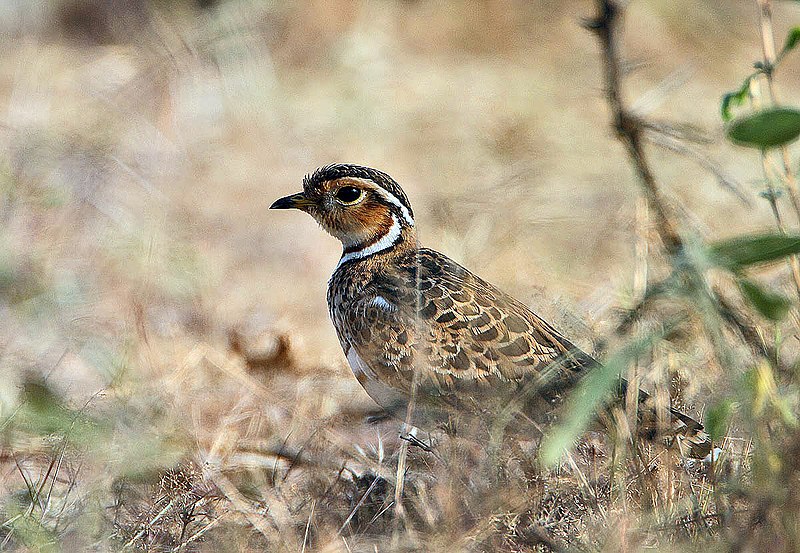
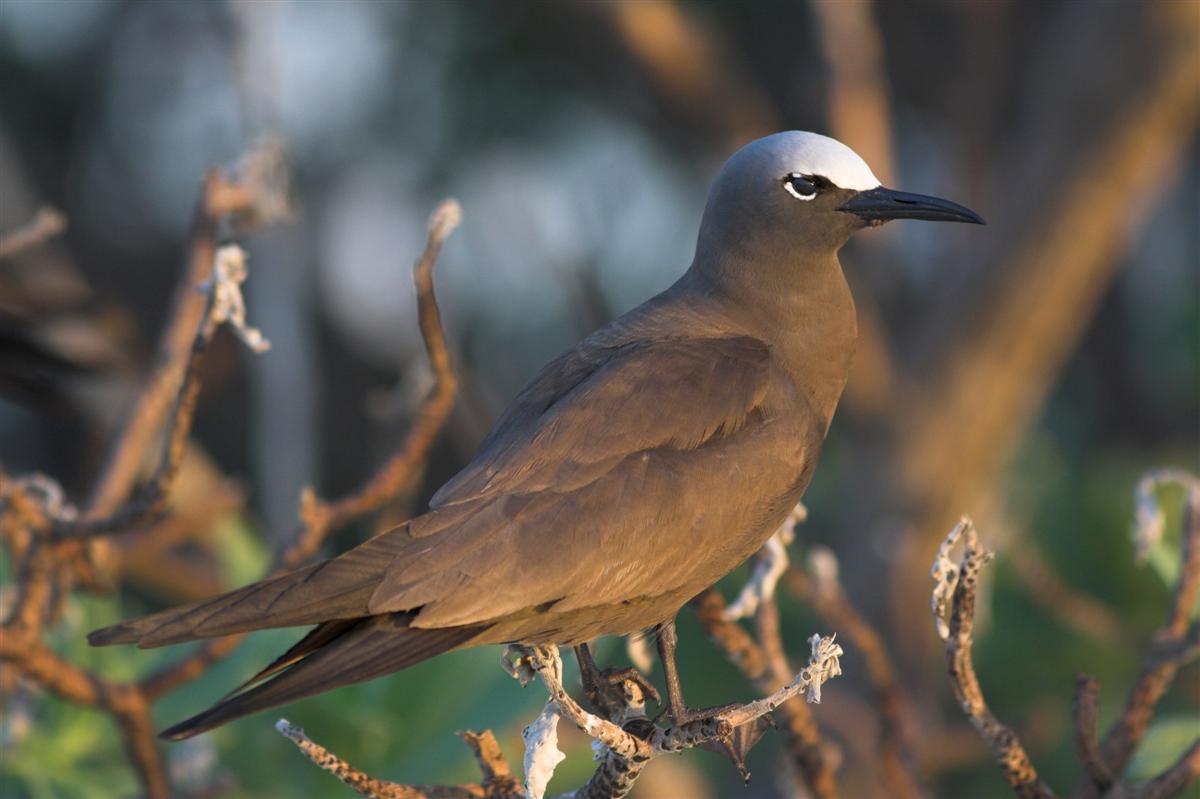
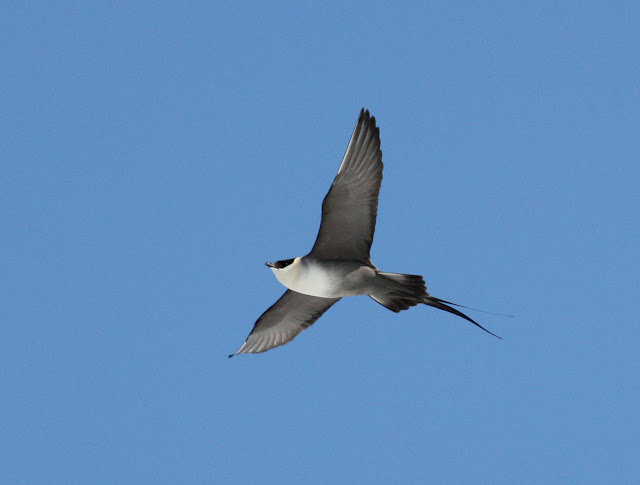
While doing fieldwork along the local creeks yesterday, I spotted this bat flying around in the middle of the afternoon over the creek, then perching on a nearby tree. I'm pretty inexperienced in bat ID, so let me know if you can figure this one out:

Wednesday, May 21, 2008
Bat Identification
Labels:
Mammals
How many Toucanets? (Part 2)
I covered the Central American species in the Aulacorhynchus ‘prasinus’ (Emerald Toucanet) species complex in Part 1. Here, I cover the South American forms.
There are seven subspecies in the South American clade, ranging along mid-slopes of the Andes from their northernmost extent in Colombia and Venezuela south to Peru and Bolivia. The field guides, and the two papers examining them, agree on their rough distribution as follows:
A.p. lautus (Colombia: Sierra de Santa Marta)
A.p. phaeolaemus (Colombia: Western Andes)
A.p. griseigularis (Colombia: Central Andes)
A.p. albivitta (Colombia,Venezuela, Ecuador: Eastern Andes)
A.p. cyanolaemus (Ecuador and Peru)
A.p. atrogularis (Peru)
A.p. dimidiatus (Bolivia)
Here is a composite figure approximately depicting their ranges and appearance based on multiple sources (see full citation below). Throat color ranges from white to gray to blue-gray to black, roughly in a northward to southward progression. The extent of yellow in the bill varies regionally. No distinct population breaks jump out. A large population stretching from Bolivia to southwest Ecuador includes, from south to north, the black-throated forms dimidiatus, atrogularis, and the blue-throated cyanolaemus. In the north, blue-gray-throated phaeolaemus, gray-throated griseigularis, and white-throated albivitta inhabit parallel north-south branches of the Andes, in that west-to-east order. Gray-throated lautus is found on the disjunct mountain range on the Colombian coast, the Sierra de Santa Marta.
(click to view large)

Sources disagree on whether some of these populations are disjunct or continuous and in some cases there is no data on whether or where some subspecies make contact with one another. The following map is how most field guides depict the range of Emerald Toucanet in the Andes, and shows in more detail how the populations follow narrow elevation gradients along the Andes (it is pieced together from two field guides, don’t mind the color change – green in the north, blue in Peru, see citation below). This map also shows the basal Central American Darien population, A. cognatus, on the border with Panama.

Specifically, when I say sources disagree, I mostly mean the two papers I’ve been discussing disagree with the field guides. Here are the population maps from those two sources, Navarro-Siguenza on the left and Puebla-Olivares on the right:
(click to view large)

You’ll notice that these maps give away the taxonomic conclusions of each paper, so allow me to step through those conclusions before trying to reconcile them with the information in the field guides.
The Puebla-Olivares phylogeny breaks down into two groups – one group composed solely of albivitta from the eastern Colombian Andes, and its two northern forks (Merida, Perija). This group is divergent from the remaining South American lineages by about 5% sequence divergence. The authors recommend splitting it as the monotypic species, the White-throated Toucanet (A. albivitta).
The remaining group contains the birds from the central Colombian Andes southward to Bolivia. Of these, the central Colombian Andes birds are basal and most divergent, by about 1.5%, and the authors recommend splitting this as the Grey-throated Toucanet (A. griseigularis).
All of the remaining populations fall into one closely-related, poorly resolved group, including the blue-throated cyanolaemus and the black-throated atrogularis and dimidiatus. The authors recommend splitting this last group as the Black-throated Toucanet (A. atrogularis), an odd name for a species including multiple throat colors.
Here is a summary of the Bayesian tree, with approximate mtDNA divergences:
(click to view large)

The Puebla-Olivares phylogeny is missing two subspecies in their sampling – lautus from the Sierra de Santa Marta, and phaeolaemus from the western Colombian Andes. We can only hypothesize where these taxa fit into the phylogeny. If I had to guess, based on coloration and range, phaeolaemus would be closely allied to its close neighbors, griseigularis. Lautus is more distinctive as a disjunct population and in coloration, and I would expect it to fall out as a basal group, or perhaps with its closest neighbor, albivitta. These are just my speculations, however, and only completing the molecular work will tell us for sure.
Using their color and morphology analysis, Navarro-Siguenza split the South American toucanets into three species: A. lautus, A. albivitta (including griseigularis and phaeolaemus), and A. atrogularis (including cyanolaemus and dimidiatus). The phylogeny tells us that lumping the three Colombian Andes subspecies based on similarity in pattern wasn’t correct, as griseigularis is actually closer to the southern atrogularis group than the other sampled northern subspecies. On the other hand, the phylogeny actually confirms the morphology assessment that the blue-throated birds in the south are in the same species as the black-throated birds. Based on how complex the situation is, we really need to get lautus and phaeolaemus sampled to fully sort out the evolutionary history of the ‘prasinus’ complex in South America.
Two main problems exist in the analysis of this species complex that also need to be addressed before the evolutionary history of the group can be fully figured out. There is some confusion in the Navarro-Siguenza analysis of the color patterns in the northern subspecies, and confusion in sampling in Ecuador in Puebla-Olivares, where the white-throated albivitta meets the southern blue-throated cyanolaemus.
Take a look at the Ecuadorian population in the maps from the two papers above – the ‘disjunct’ Ecuadorian birds are assigned to albivitta in the coloration paper, but cyanolaemus in the phylogeny paper. So, specifically where do albivitta and cyanolaemus occur in Ecuador? Ridgely and Greenfield (2001), in their Ecuador field guide, illustrate the population distribution quite clearly – albivitta comes down the east slope of the Andes from Colombia, and cyanolaemus comes up the east slope from Peru. They give the known southern limit of albivitta as the Napo region, and the known northern limit of cyanolaemus as Morona-Santiago, but state that it is unclear whether the two forms meet in central Ecuador:
Using their color and morphology analysis, Navarro-Siguenza split the South American toucanets into three species: A. lautus, A. albivitta (including griseigularis and phaeolaemus), and A. atrogularis (including cyanolaemus and dimidiatus). The phylogeny tells us that lumping the three Colombian Andes subspecies based on similarity in pattern wasn’t correct, as griseigularis is actually closer to the southern atrogularis group than the other sampled northern subspecies. On the other hand, the phylogeny actually confirms the morphology assessment that the blue-throated birds in the south are in the same species as the black-throated birds. Based on how complex the situation is, we really need to get lautus and phaeolaemus sampled to fully sort out the evolutionary history of the ‘prasinus’ complex in South America.
Two main problems exist in the analysis of this species complex that also need to be addressed before the evolutionary history of the group can be fully figured out. There is some confusion in the Navarro-Siguenza analysis of the color patterns in the northern subspecies, and confusion in sampling in Ecuador in Puebla-Olivares, where the white-throated albivitta meets the southern blue-throated cyanolaemus.
Take a look at the Ecuadorian population in the maps from the two papers above – the ‘disjunct’ Ecuadorian birds are assigned to albivitta in the coloration paper, but cyanolaemus in the phylogeny paper. So, specifically where do albivitta and cyanolaemus occur in Ecuador? Ridgely and Greenfield (2001), in their Ecuador field guide, illustrate the population distribution quite clearly – albivitta comes down the east slope of the Andes from Colombia, and cyanolaemus comes up the east slope from Peru. They give the known southern limit of albivitta as the Napo region, and the known northern limit of cyanolaemus as Morona-Santiago, but state that it is unclear whether the two forms meet in central Ecuador:

Puebla-Olivares illustrate a disjunct population in SW Ecuador and NW Peru - cyanolaemus. They illustrate another disjunct population in NE Ecuador, which is labeled on their specimen list as albivitta. Navarro-Siguenza et al. (2001) show the same disjunct populations, and label the NE Ecuador population as albivitta. All field guide range maps I’ve seen show the NE Ecuador population as continuous with the Northern Andes, so I would believe that birds in the northern half of the Ecuadorian Andes are indeed white-throated albivitta birds as Navarro-Siguenza labels them and Puebla-Olivares does in their specimen list.
So what? Well, the Puebla-Olivares phylogeny puts this population solidly within the southern dimidiatus-atrogularis-cyanolaemus group! Puebla-Olivares label the NE Ecuador birds as atrogularis-group on their map with no clarification in the text on this switch. Their map shows albivitta populations as restricted to Colombia. The birds sampled from NE Ecuador are labeled as albivitta in their specimen list, and are sampled from Napo, within the range of albivitta as in Ridgely and Greenfield (2001). Puebla-Olivares et al. (2008) make no mention of this crazy result, and I can’t figure out what is the most likely hypothesis – A) there is some gross error in the paper, B) the exact range divide between albivitta and cyanolaemus in Ecuador is unclear and the paper actually sampled cyanolaemus or C) albivitta birds in Ecuador are really a disjunct population allied with cyanolaemus and not with Colombian populations of albivitta! If the white-throated Ecuadorian birds are in the southern atrogularis group, then this species is remarkable among all in the ‘prasinus’ species complex as it includes birds with three major throat colors – white, blue, and black. I think only clarification from the authors will help us figure this one out - I may try to contact them soon.
Taking a detailed look at the Colombian populations analyzed by color pattern in Navarro-Siguenza et al. (2001), I realized that the color patterns they report don’t reconcile with those depicted in the field guides. In analyzing this paper, I must first point out a gross error – figure 3, the frequencies of different color and pattern traits in the various populations, has been mislabeled. Instead of an AB/CD pattern in labeling the four components, it goes AD/BC – this isn’t important unless you’re looking at the figure yourself, then you’ll see what I mean. It is also possible I have a pdf copy that has since had its errors corrected by the journal.
In the following map, lautus is found in the Sierra de Santa Marta, the large triangular coastal range in northern Colombia. albivitta inhabits the Eastern Cordillera, including the northwest fork (Sierra de Perija) and the northeast fork into Venezuela (Cordillera de Merida). griseigularis inhabits the Central Cordillera, and the east slope of the Western Cordillera. phaeolaemus inhabits the western slope of the Western Cordillera.

The field guides are abundantly clear – phaeolaemus is blue-gray-throated, griseigularis is gray-throated, and albivitta is white-throated. My confusion originated from the face pattern labeled “I” in Navarro-Siguenza - a gray-throated bird with reduced yellow on the bill, makes up about 70% of Eastern Andes birds sampled and appearing in no other population. However, if one refers back to the face pattern legend, pattern “I” is located from Cauca in the Western Andes. Pattern “I” resembles no population of toucanet as depicted in the field guides. The explanation for this remains a mystery to me – the eastern albivitta is supposed to be white-throated with no variation, while the westernmost phaeolaemus is supposed to be blue-gray throated. Neither greseigularis nor phaeolaemus is ever depicted with reduced yellow on the bill. I can’t make sense out of this – there must be some error, as pointed out by the difference in labeling of “I” between two figures, and I’m not sure what the correct result should be. Because I can’t make any sense out of this, I don’t trust any of the rest of the analysis of the albivitta-griseigularis-phaeolaemus group in their data (lautus and the southern group seem okay and don’t conflict with other sources).
To illustrate what I am talking about, here are the author’s different face patterns, with the throat color labeled and the approximate percentage of each pattern found in each population. Note particularly how the only gray or blue-gray throated population in the Colombian Andes is the pattern "I", in the Eastern Andes. This makes no sense at all when you refer back to the subspecies depicted above. The authors do not make mention of these significant differences except to suggest that the variation in pattern is due to frequent contact between populations, which doesn't make sense when the populations don't have the patterns they 'should' have.
(click to view large)

The worst problem I see in Navarro-Siguenza is not the gross errors (mislabeling figures, misidentifying the population of face pattern “I”) but the lack of data given allowing others to sort out their results. They lump their specimens into broadly defined localities (see the paper’s map above, and compare with the more detailed field guide maps). If the variation and confusion in the albivitta group is due to previously undepicted regional variation, no deciphering of it is possible from this lumping of source data. Most frustratingly, the authors does not give precise locality data for any specimens used, preventing any further attempt to understand their data. To see how useful providing specific locality data, look how I used the specimen list in Puebla-Olivares above.
Summary
Puebla-Olivares and Navarro-Siguenza both state that the systematics of the South American ‘prasinus’ complex are under need of more serious work, and I couldn’t agree more. While I am convinced by their work on the Central American group, leading to four species splits, I can’t say I am convinced by the splits in South America (although I don’t doubt that there are splits to be made) and I think more data should be obtained from all populations before a reasoned decision can be made. Too much information is missing to properly delineate which populations belong to which species.
Summary
Puebla-Olivares and Navarro-Siguenza both state that the systematics of the South American ‘prasinus’ complex are under need of more serious work, and I couldn’t agree more. While I am convinced by their work on the Central American group, leading to four species splits, I can’t say I am convinced by the splits in South America (although I don’t doubt that there are splits to be made) and I think more data should be obtained from all populations before a reasoned decision can be made. Too much information is missing to properly delineate which populations belong to which species.
Here are all of the putative species splits identified by the Puebla-Olivares et al. phylogeny:
Aulacorhynchus wagleri (Wagler’s Toucanet)
A. prasinus (Emerald Toucanet)
Incl: prasinus, warneri, chiapensis, virescens, stenorhabdus, volcanius
A. caeruleogularis (Blue-throated Toucanet)
Incl: caeruleogularis, maxillaris
A. cognatus (Goldman’s Blue-throated Toucanet)
A. albivitta (White-throated Toucanet)
A. griseigularis (Grey-throated Toucanet)
A. atrogularis (Black-throated Toucanet)
Incl: atrogularis, dimidiatus, cyanolaemus
Populations not assignable to species based on the molecular work so far:
lautus
phaeolaemus
Ecuadorian populations of albivitta
You’ll have to check out both papers yourself for discussion of the biogeography of the group as we understand it so far, although a detailed analysis of the causes of diversification in this group is lacking. They do note that the patterns in distribution of toucanet lineages is similar to other Andean species, so perhaps a broad-scale comparative work is possible as we examine more groups in as much detail as the toucanets. Puebla-Olivares mention that they are going to analyze the rest of the Aulacorhynchus toucanets in this manner – I hope their further work lends a lot of clarity to both the evolutionary history and taxonomic clarity of all of the toucanets. They’re just fantastic birds.
Finally, if you were wondering about this picture, it is A. atrogularis from Peru:

References
Subspecies depictions:
Map - Puebla-Olivares et al. 2008
cyanolaemus, atrogularis, dimidiatus - Schulenberg et al. 2007
lautus - Short and Gilbert 2002
albivitta, griseigularis, phaeolaemus - Restall et al. 2007
Combined map:
Peru - Shulenberg et al. 2007
Northern South America - Restall et al. 2007
Population maps:
Puebla-Olivares et al. 2008 (right)
Navarro-Siguenza et al. 2001 (left)
Phylogeny based on Bayesian tree in Puebla-Olivares et al. 2008
Ecuador map - Ridgely and Greenfield 2001
Colombia map - Source
face patterns - from figs. 1 and 3 of Navarro-Siguenza et al. 2001
A. atrogularis photo - Source
Hilty, S.L., and W.L. Brown. 1986. A Guide to the Birds of Colombia. Princeton University Press.
NAVARRO S., A.G., PETERSON, A.T., LÓPEZ-MEDRANO, E., BENÃTEZ-DÃAZ, H. (2001). SPECIES LIMITS IN MESOAMERICAN AULACORHYNCHUS TOUCANETS. The Wilson Bulletin, 113(4), 363. DOI: 10.1676/0043-5643(2001)113[0363:SLIMAT]2.0.CO;2
Puebla-Olivares, F., E. Bonaccorso, A.E. de los Monteros, K.E. Omland, J.E. Llorente-Bousquets, A.T. Peterson, and A.G. Navarro-Siguenza. 2008. Speciation in the Emerald Toucanet (Aulacorhynchus prasinus) complex. The Auk. 125(1): 39-50.
Restall, R., C. Rodner, and M. Lentino. 2007. Birds of Northern South America: An Identification Guide, Volume 2. Yale University Press.
Ridgely, R.S., and P.J. Greenfield. 2001. The Birds of Ecuador Field Guide. Comstock Publishing.
Schulenberg, T.S., D.F. Stotz, D.F. Lane, J.P. O'Neill, and T.P. Parker III. 2007. Birds of Peru. Princeton University Press.
Short, L, J Horne, and AE Gilbert. 2002. Toucans, Barbets, and Honeyguides. Oxford University Press, USA.
Labels:
Birds,
BPR3,
Evolution,
Research,
Systematics and Taxonomy
Sunday, May 18, 2008
How many Toucanets? (Part 1)
A. prasinus, or... ?
The Emerald Toucanet is a montane forest species with disjunct populations on mountain ranges from Mexico to Bolivia. The complex currently contains as many as 17 subspecies:
A.p. wagleri (Mexico: Pacific slope)
A.p. prasinus (Mexico: Atlantic slope)
A.p. warneri (Mexico: Sierra de los Tuxtlas)
A.p. chiapensis (Mexico: Chiapas and adjacent Guatemala)
A.p. virescens (Belize – Nicaragua)
A.p. stenorhabdus (Belize – Nicaragua)
A.p. volcanius (Belize – Nicaragua)
A.p. maxillaris (Costa Rica)
A.p. caeruleogularis (western Panama)
A.p. cognatus (eastern Panama: Darien)
A.p. lautus (Columbia: Sierra de Santa Marta)
A.p. phaeolaemus (Columbia: Western Andes)
A.p. griseigularis (Columbia: Central Andes)
A.p. albivitta (Columbia and Venezuela: Eastern Andes)
A.p. cyanolaemus (Ecuador and Peru)
A.p. dimidiatus (Bolivia)
A.p. atrogularis (Peru)
Puebla-Olivares et al. (2008) construct a phylogeny of the complex using three mitochondrial genes to follow up on the morphology and color analysis of Navarro-Siguenza et al. (2001). The tree was essentially congruent for all three loci, and using all three phylogenetic reconstructions (parsimony, likelihood, and Bayesian), indicating strong support for the given results. Here is the Bayesian tree - I'll be discussing each part of it in turn, so you don't have to grasp it all at once.

The 'prasinus' species complex is a monophyletic group, when using the other species in the genus as outgroups, so the 'prasinus' complex taxa are each other's closest extant relatives. They aren't very 'closely related' however - the molecular data indicate substantial divergence within the group, averaging around 5% between the seven main lineages, which is on par with the divergence between other members of the genus, which average 6 to 7% between species. This level of divergence is often considered a species-level in birds, because it indicates that the different lineages have been evolving independently as separate lineages for a considerable amount of time - possibly millions of years (there is a standard molecular clock for birds of 2% mtDNA divergence per million years, but this isn't totally universal or accepted). Saying what level of divergence is "enough" for species is not something that can be answered, but the fact that the other members of the genus are equivalently divergent is pretty indicative that we are dealing with a species complex rather than an array of subspecies.
The various lineages in the 'prasinus' complex map out well geographically. The first and largest divergence in the group creates two clades – a Central American clade with four main lineages, and a South American clade with three main lineages. These two main clades average around 7% divergence from each other. I’ll dive into the details of the Central American clade first, and address the South American clade in the next post.
I've summarized the range and coloration of the populations of the Central American clade in the composite figure below, drawing from the map and face pattern diagrams of Navarro-Siguenza et al. (2001), and pictures from various field guides (see full citation below). The Central American populations can be broken down into two groups by throat color (blue vs. white) and can be further subdivided by bill and face pattern features. Based on this, one might be most tempted to split the group into two species, each with two main subspecies groups - the white-throated northern populations, and the blue-throated southern populations.

However, a two-species split in this clade based on throat color is not supported by the genetic evidence. As I mentioned before, the phylogeny of this complex maps out well geographically. The basal members of the group are in Panama, as expected by the main Central vs. South American divergence, and the group branches out in a northward progression. However, if there were a two-species split in the clade, we'd expect to see a tree with two main branches, subdivided into subspecies. Instead, the basal member of the clade is the population in the Darien of eastern Panama, sister to the remaining Central American populations. The Costa Rican populations fall out next, and the northern Central America populations fall out last. So, the two blue-throated populations are not closely related sister taxa, but are actually among the more divergent of the group. Based on this, Puebla-Olivares et al. (2008) end up treating the Central American populations of the 'prasinus' complex as four distinct species, broken down as follows:

The basal member of the Central American clade is A.p. cognatus from the Darien mountains of eastern Panama. The Darien population is divergent from the rest of the Central American lineages by about 6%, and the authors suggest it be split as Goldman’s Blue-throated Toucanet (A. cognatus). This form is not depicted in any field guide that I could find. It is very similar to, yet shows subtle fixed characters distinct from, the Costa Rican form based on the color patterns described in Navarro-Siguenza et al. (2001) - compare the face pattern diagrams in the figure above.
The next group of the remaining Central American lineages is the population in Costa Rica and western Panama – A.p. caeruleogularis and A.p. maxillaris. This group is split from the remaining lineages in Central America by an average of 5% divergence, and is split as the Blue-Throated Toucanet (A. caeruleogularis). The two subspecies in this group show essentially nil divergence (0.09%). I observed this species on my trip to Costa Rica last winter break, and managed a few poor images. Here is a Blue-throated Toucanet in mid-hop:

The remaining Central American populations are separated from the Costa Rica/Panama group by the lowlands of Lake Nicaragua, and encompass the mountains from Nicaragua up through Mexico. These populations are characterized by their white throats, as opposed to the blue throats of the previous two groups. This northern Central America group is split into two lineages. One lineage is found in the Sierra Madre del Sur, the mountains of the Mexican states of Guerrero and Oaxaca on the Pacific slope. This group is separated by about 3.7% divergence from the other northern Central America populations, and is split as Wagler’s Toucanet (A. wagleri). Although this population only represented one subspecies in the 'prasinus' complex, it showed a surprised amount of divergence – 1% - between the Guerrero and Oaxaca populations. The authors identify this as a region for further study - it also supports a number of other phylogeographic splits and is a region of high endemism in Mexico. See the Howell and Webb (1995) field guide to Mexico for more examples.
The last Central American lineage encompasses six subspecies (prasinus, warneri, chiapensis, virescens, stenorhabdus, volcanius), and shows weak genetic structuring that supports some level of incipient divergence within the group. The whole group is split (or rather, retained) as Emerald Toucanet (A. prasinus) because it contains the type subspecies of the 'prasinus' complex. The most divergent population is A.p. chiapensis of the Mexican state of Chiapas and adjacent Guatemala, split by 0.96% divergence from the other populations. The remaining populations on the Sierra Madre Oriental, Sierra Madre de los Tuxtlas, and from Belize through Nicaragua are very weakly split. Navarro et al. (2001) identify little variation within this group, despite it containing a number of subspecies populations.
All four of these species identified by Puebla-Olivares et al. (2008) have unique combinations of face and bill pattern and color, and show substantial genetic divergence. Perhaps the weakest of these splits in morphology and color is Wagler's Toucanet, but 3.7% divergence is still substantial , and Navarro-Siguenza et al. (2001) show Wagler's to be fixed for color traits that separate them from other similar Emerald Toucanet populations, including bill pattern, superciliary color, and color at the base of the mandible. In noting the fairly large divergences within populations of A. wagleri and A. prasinus, one must wonder again where the limit is when it comes to splitting up lineages - how much divergence does it take to be species-level? If we look at the variation within A. prasinus, up to 1% divergence amongst populations in Mexico, Guatemala, and down to Nicaragua - this variation is not congruent with distinctive, fixed coloration traits, as Wagler's Toucanet is, although there is some variation discussed in Winker (2000). These various populations are not split up at the species level, while Wagler's is split from the group.
This four-species split of the Central American populations of Aulacorhynchus 'prasinus' are the same as those identified with color and morphology analysis in Navarro-Siguenza et al. (2001). As Navarro-Siguenza et al. discuss, nowhere in Central America do these various groups come into contact, so direct tests of the Biological Species Concept can't occur. They do note that bill and face patterns are important social cues in toucans, and they reason that these could serve as reproductive barriers and thus qualify as Biological species in the absence of any evidence to the contrary. The groups outlined by Navarro-Siguenza et al. and Puebla-Olivares et al. are congruent in morphology, color, and genetics, and also qualify as species under the Phylogenetic Species Concept (they are diagnosable populations) and the Evolutionary Species Concept (they are evolutionarily distinct, independently evolving groups). To me, this combined evidence provides a very clear picture for splitting the Central American members of the 'prasinus' complex into four species.
As you'll see, the picture in South America is a lot less clear. See Part 2...
A.p. wagleri (Mexico: Pacific slope)
A.p. prasinus (Mexico: Atlantic slope)
A.p. warneri (Mexico: Sierra de los Tuxtlas)
A.p. chiapensis (Mexico: Chiapas and adjacent Guatemala)
A.p. virescens (Belize – Nicaragua)
A.p. stenorhabdus (Belize – Nicaragua)
A.p. volcanius (Belize – Nicaragua)
A.p. maxillaris (Costa Rica)
A.p. caeruleogularis (western Panama)
A.p. cognatus (eastern Panama: Darien)
A.p. lautus (Columbia: Sierra de Santa Marta)
A.p. phaeolaemus (Columbia: Western Andes)
A.p. griseigularis (Columbia: Central Andes)
A.p. albivitta (Columbia and Venezuela: Eastern Andes)
A.p. cyanolaemus (Ecuador and Peru)
A.p. dimidiatus (Bolivia)
A.p. atrogularis (Peru)
Puebla-Olivares et al. (2008) construct a phylogeny of the complex using three mitochondrial genes to follow up on the morphology and color analysis of Navarro-Siguenza et al. (2001). The tree was essentially congruent for all three loci, and using all three phylogenetic reconstructions (parsimony, likelihood, and Bayesian), indicating strong support for the given results. Here is the Bayesian tree - I'll be discussing each part of it in turn, so you don't have to grasp it all at once.
(click to view large)

The 'prasinus' species complex is a monophyletic group, when using the other species in the genus as outgroups, so the 'prasinus' complex taxa are each other's closest extant relatives. They aren't very 'closely related' however - the molecular data indicate substantial divergence within the group, averaging around 5% between the seven main lineages, which is on par with the divergence between other members of the genus, which average 6 to 7% between species. This level of divergence is often considered a species-level in birds, because it indicates that the different lineages have been evolving independently as separate lineages for a considerable amount of time - possibly millions of years (there is a standard molecular clock for birds of 2% mtDNA divergence per million years, but this isn't totally universal or accepted). Saying what level of divergence is "enough" for species is not something that can be answered, but the fact that the other members of the genus are equivalently divergent is pretty indicative that we are dealing with a species complex rather than an array of subspecies.
The various lineages in the 'prasinus' complex map out well geographically. The first and largest divergence in the group creates two clades – a Central American clade with four main lineages, and a South American clade with three main lineages. These two main clades average around 7% divergence from each other. I’ll dive into the details of the Central American clade first, and address the South American clade in the next post.
I've summarized the range and coloration of the populations of the Central American clade in the composite figure below, drawing from the map and face pattern diagrams of Navarro-Siguenza et al. (2001), and pictures from various field guides (see full citation below). The Central American populations can be broken down into two groups by throat color (blue vs. white) and can be further subdivided by bill and face pattern features. Based on this, one might be most tempted to split the group into two species, each with two main subspecies groups - the white-throated northern populations, and the blue-throated southern populations.
(click to view large)

However, a two-species split in this clade based on throat color is not supported by the genetic evidence. As I mentioned before, the phylogeny of this complex maps out well geographically. The basal members of the group are in Panama, as expected by the main Central vs. South American divergence, and the group branches out in a northward progression. However, if there were a two-species split in the clade, we'd expect to see a tree with two main branches, subdivided into subspecies. Instead, the basal member of the clade is the population in the Darien of eastern Panama, sister to the remaining Central American populations. The Costa Rican populations fall out next, and the northern Central America populations fall out last. So, the two blue-throated populations are not closely related sister taxa, but are actually among the more divergent of the group. Based on this, Puebla-Olivares et al. (2008) end up treating the Central American populations of the 'prasinus' complex as four distinct species, broken down as follows:
A summary of the Central American toucanet tree with approx. mtDNA divergences
(click to view large)

The basal member of the Central American clade is A.p. cognatus from the Darien mountains of eastern Panama. The Darien population is divergent from the rest of the Central American lineages by about 6%, and the authors suggest it be split as Goldman’s Blue-throated Toucanet (A. cognatus). This form is not depicted in any field guide that I could find. It is very similar to, yet shows subtle fixed characters distinct from, the Costa Rican form based on the color patterns described in Navarro-Siguenza et al. (2001) - compare the face pattern diagrams in the figure above.
The next group of the remaining Central American lineages is the population in Costa Rica and western Panama – A.p. caeruleogularis and A.p. maxillaris. This group is split from the remaining lineages in Central America by an average of 5% divergence, and is split as the Blue-Throated Toucanet (A. caeruleogularis). The two subspecies in this group show essentially nil divergence (0.09%). I observed this species on my trip to Costa Rica last winter break, and managed a few poor images. Here is a Blue-throated Toucanet in mid-hop:

The remaining Central American populations are separated from the Costa Rica/Panama group by the lowlands of Lake Nicaragua, and encompass the mountains from Nicaragua up through Mexico. These populations are characterized by their white throats, as opposed to the blue throats of the previous two groups. This northern Central America group is split into two lineages. One lineage is found in the Sierra Madre del Sur, the mountains of the Mexican states of Guerrero and Oaxaca on the Pacific slope. This group is separated by about 3.7% divergence from the other northern Central America populations, and is split as Wagler’s Toucanet (A. wagleri). Although this population only represented one subspecies in the 'prasinus' complex, it showed a surprised amount of divergence – 1% - between the Guerrero and Oaxaca populations. The authors identify this as a region for further study - it also supports a number of other phylogeographic splits and is a region of high endemism in Mexico. See the Howell and Webb (1995) field guide to Mexico for more examples.
The last Central American lineage encompasses six subspecies (prasinus, warneri, chiapensis, virescens, stenorhabdus, volcanius), and shows weak genetic structuring that supports some level of incipient divergence within the group. The whole group is split (or rather, retained) as Emerald Toucanet (A. prasinus) because it contains the type subspecies of the 'prasinus' complex. The most divergent population is A.p. chiapensis of the Mexican state of Chiapas and adjacent Guatemala, split by 0.96% divergence from the other populations. The remaining populations on the Sierra Madre Oriental, Sierra Madre de los Tuxtlas, and from Belize through Nicaragua are very weakly split. Navarro et al. (2001) identify little variation within this group, despite it containing a number of subspecies populations.
All four of these species identified by Puebla-Olivares et al. (2008) have unique combinations of face and bill pattern and color, and show substantial genetic divergence. Perhaps the weakest of these splits in morphology and color is Wagler's Toucanet, but 3.7% divergence is still substantial , and Navarro-Siguenza et al. (2001) show Wagler's to be fixed for color traits that separate them from other similar Emerald Toucanet populations, including bill pattern, superciliary color, and color at the base of the mandible. In noting the fairly large divergences within populations of A. wagleri and A. prasinus, one must wonder again where the limit is when it comes to splitting up lineages - how much divergence does it take to be species-level? If we look at the variation within A. prasinus, up to 1% divergence amongst populations in Mexico, Guatemala, and down to Nicaragua - this variation is not congruent with distinctive, fixed coloration traits, as Wagler's Toucanet is, although there is some variation discussed in Winker (2000). These various populations are not split up at the species level, while Wagler's is split from the group.
This four-species split of the Central American populations of Aulacorhynchus 'prasinus' are the same as those identified with color and morphology analysis in Navarro-Siguenza et al. (2001). As Navarro-Siguenza et al. discuss, nowhere in Central America do these various groups come into contact, so direct tests of the Biological Species Concept can't occur. They do note that bill and face patterns are important social cues in toucans, and they reason that these could serve as reproductive barriers and thus qualify as Biological species in the absence of any evidence to the contrary. The groups outlined by Navarro-Siguenza et al. and Puebla-Olivares et al. are congruent in morphology, color, and genetics, and also qualify as species under the Phylogenetic Species Concept (they are diagnosable populations) and the Evolutionary Species Concept (they are evolutionarily distinct, independently evolving groups). To me, this combined evidence provides a very clear picture for splitting the Central American members of the 'prasinus' complex into four species.
As you'll see, the picture in South America is a lot less clear. See Part 2...
References and Citations
Image 1 - Source
Bayesian Tree - Puebla-Olivares et al. (2008)
Tree summary - redrawn from the Bayesian tree of Puebla-Olivares et al. 2008
Central American clade figure:
Map - Navarro-Siguenza et al. 2001
Face pattern figures - Navarro-Siguenza et al. 2001
Paintings:
A. prasinus - Howell and Webb 1995
A. wagleri, A. caeruleogularis - Short, Horne, and Gilbert 2002
Howell, SNG, and S Webb. 1995. A Guide to the Birds of Mexico and Northern Central America. Oxford University Press, USA.
Image 1 - Source
Bayesian Tree - Puebla-Olivares et al. (2008)
Tree summary - redrawn from the Bayesian tree of Puebla-Olivares et al. 2008
Central American clade figure:
Map - Navarro-Siguenza et al. 2001
Face pattern figures - Navarro-Siguenza et al. 2001
Paintings:
A. prasinus - Howell and Webb 1995
A. wagleri, A. caeruleogularis - Short, Horne, and Gilbert 2002
Howell, SNG, and S Webb. 1995. A Guide to the Birds of Mexico and Northern Central America. Oxford University Press, USA.
Navarro-Siguenza, A.G., A.T. Peterson, E. lo Pez-Medrano, and H. Benitez-Diaz. 2001. Species limits in mesoamerican Aulacorhynchus toucanets. Wilson Bulletin. 113(4): 363-372.
Puebla-Olivares, F., Bonaccorso, E., de los Monteros, A.E., Omland, K.E., Llorente-Bousquets, J.E., Peterson, A.T., Navarro-Siguenza, A.G. (2008). SPECIATION IN THE EMERALD TOUCANET (AULACORHYNCHUS PRASINUS) COMPLEX. The Auk, 125(1), 39-50. DOI: 10.1525/auk.2008.125.1.39
Short, L, J Horne, and AE Gilbert. 2002. Toucans, Barbets, and Honeyguides. Oxford University Press, USA.
Winker, K. 2000. A new subspecies of Toucanet (Aulacorhynchus prasinus) from Veracruz, Mexico. Ornitologia Neotropical. 11:253–257. SORA.
Puebla-Olivares, F., Bonaccorso, E., de los Monteros, A.E., Omland, K.E., Llorente-Bousquets, J.E., Peterson, A.T., Navarro-Siguenza, A.G. (2008). SPECIATION IN THE EMERALD TOUCANET (AULACORHYNCHUS PRASINUS) COMPLEX. The Auk, 125(1), 39-50. DOI: 10.1525/auk.2008.125.1.39
Short, L, J Horne, and AE Gilbert. 2002. Toucans, Barbets, and Honeyguides. Oxford University Press, USA.
Winker, K. 2000. A new subspecies of Toucanet (Aulacorhynchus prasinus) from Veracruz, Mexico. Ornitologia Neotropical. 11:253–257. SORA.
Labels:
Birds,
BPR3,
Evolution,
Research,
Systematics and Taxonomy
Thursday, May 15, 2008
I and the Bird #75

I and the Bird #75 is up at Gallicissa. There are prizes at stake, so check it out soon!
Tuesday, May 13, 2008
Come see me talk - BOS meeting
I'm heading home tomorrow to give a talk for the Buffalo Ornithological Society on my research projects. If you're in the Buffalo area, consider stopping in. I'll be giving an hour talk, broken into my two main projects:
"Function of the Primary Hooklets in Northern Rough-winged Swallows" and
"Phylogeography and Island Speciation in Hispaniolan Palm-Tanagers."
Wednesday, May 14
7:00 PM in the Cummings Room of the Buffalo Museum of Science.
I hope to see you there.
Subscribe to:
Posts (Atom)